

How to Use a Reflector for Natural Light Photography
If you’ve ever felt like everyone else understands photography except you… welcome. 😅
Maybe your photos feel inconsistent.
Ever get home from a session and wonder why one side of your subject’s face looks perfect… while the other side looks like it disappeared into a shadow?
Yeah. Same.
And if you’ve ever found yourself spending way too much time trying to “fix” uneven lighting in Lightroom, this blog is for you.
The good news?
Your camera is not broken. You just need a plan.
One of the simplest tools we use to create brighter, more consistent portraits is a reflector. And the best part is that you do not need expensive gear or complicated lighting setups to make it work.
Let’s keep this simple.
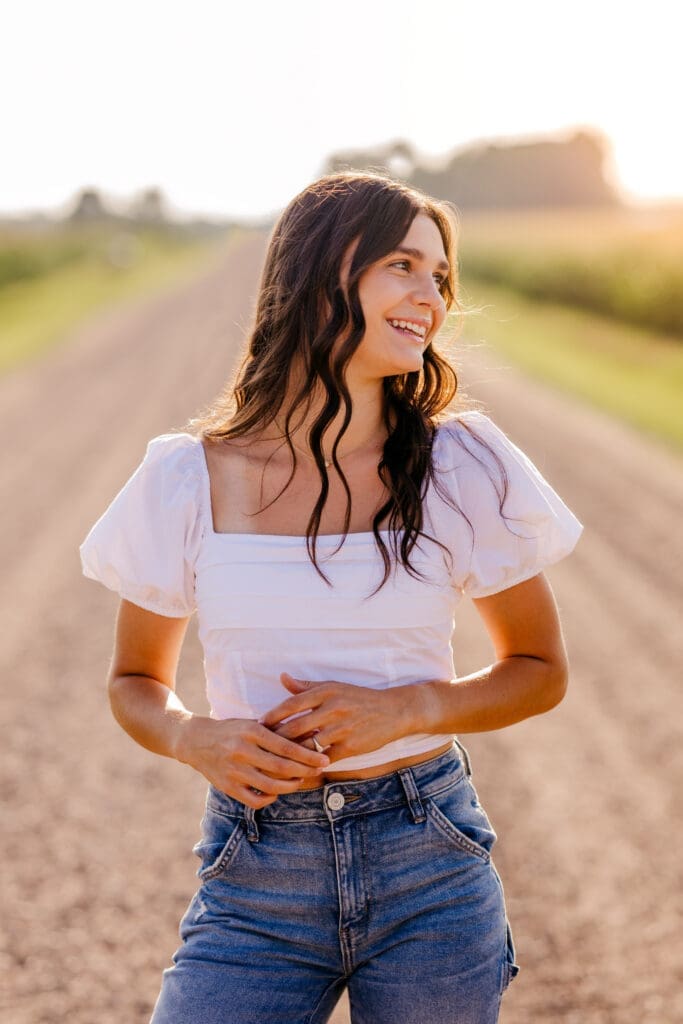


Watch the video version here 🎥
What does a reflector do?
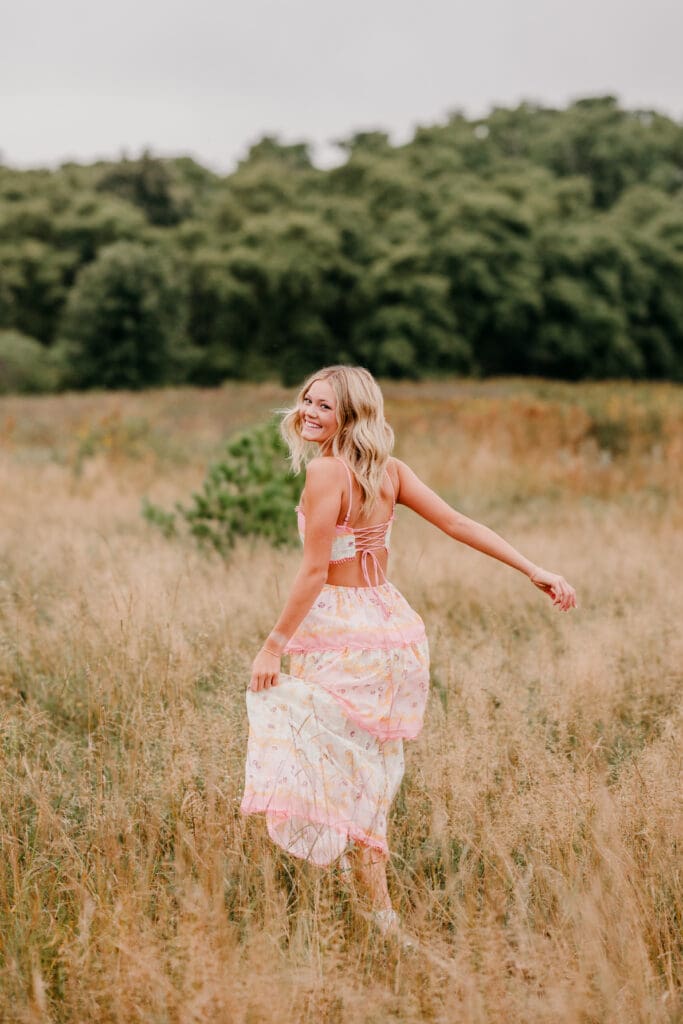
A reflector simply bounces light back onto your subject.
That’s it.
Instead of allowing one side of the face to fall into deep shadow, a reflector helps fill those shadows with light.
The result?
- More even skin tones
- Brighter eyes
- Less editing later
- More consistent portraits
If you’ve ever looked at your photos and thought:
“Why are my photos inconsistent?”
Lighting is often the answer.
A reflector helps you take control of that.
Why we use reflectors at almost every session
Let’s be honest for a second.
Natural light is amazing.
It’s also unpredictable.
Clouds move.
Subjects turn.
Locations change.
A reflector helps create consistency no matter where you are shooting.
We use them because they help us:
- Create more balanced light
- Improve skin tones
- Reduce harsh shadows
- Make editing much easier
And honestly?
Anything that saves editing time is a win in our book.


What size reflector should you use?
There isn’t one perfect reflector.
It depends on what you’re photographing.
Smaller reflector (40″)
We love using a smaller reflector when photographing:
- Individual seniors
- Headshots
- Close-up portraits
Because it’s smaller, it’s easier to position and control.
Larger reflector (48″ x 72″)
The larger reflector is our go-to when photographing:
- Families
- Couples
- Full-body portraits
- Larger groups
Since it covers more area, it can spread light across the entire subject more evenly.
If you’re photographing multiple people, the larger reflector is usually the easier option.


Gold or silver reflector?
This is one of the most common questions we get.
The answer depends on the light you’re working with.
Gold reflector
Use a gold reflector when:
- Your image feels cool
- Skin tones need warmth
- You want a slightly golden look
Silver reflector
Use a silver reflector when:
- You need stronger reflected light
- You want a more neutral look
- The existing light already feels warm
We typically use gold or silver most often.
Both work great.
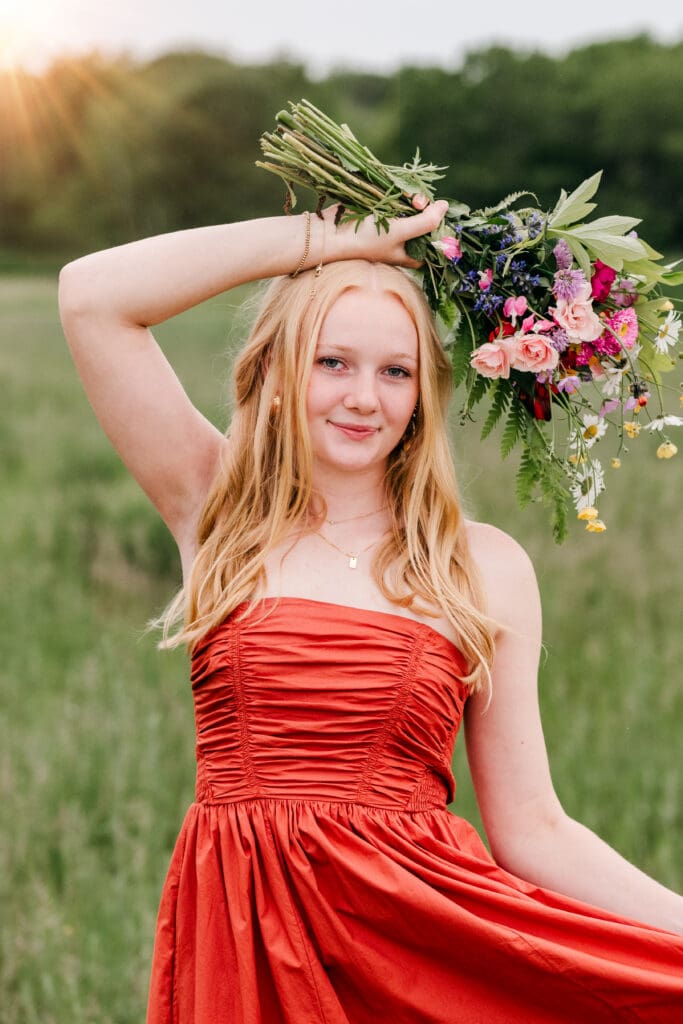
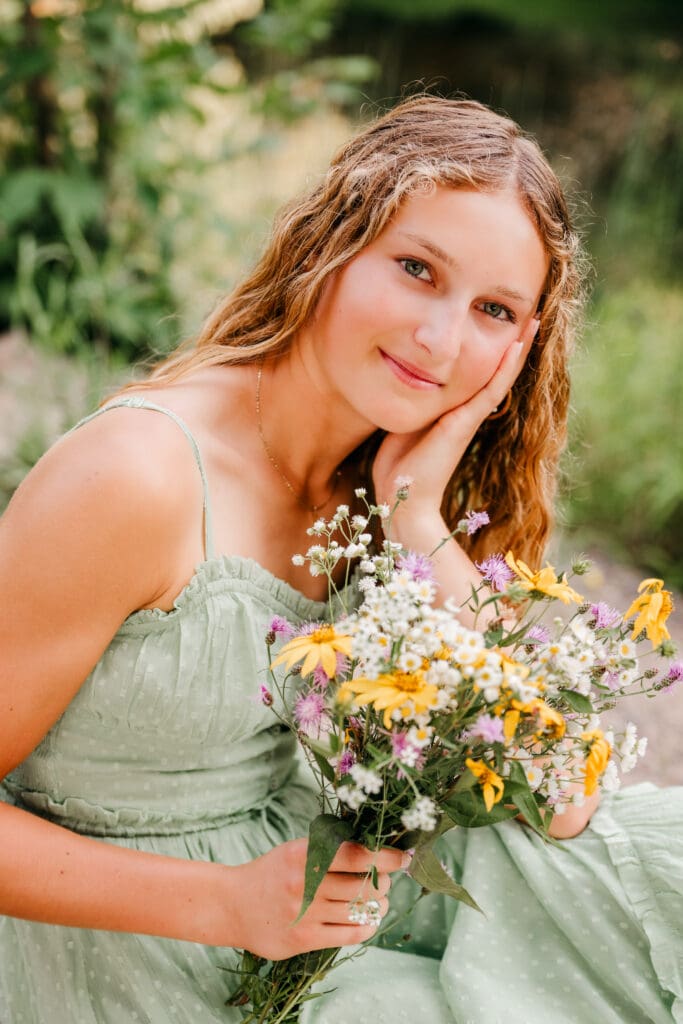
How to position a reflector
Okay, this is where photographers sometimes overcomplicate things.
Don’t.
Here’s the simple version:
Move the reflector until you see light hit your subject’s face.
Seriously.
That’s the secret.
As you’re holding the reflector, watch the shadow side of the face.
When that side starts brightening up, you’ve found your spot.
You don’t need measurements.
You don’t need complicated diagrams.
You just need to watch the light.

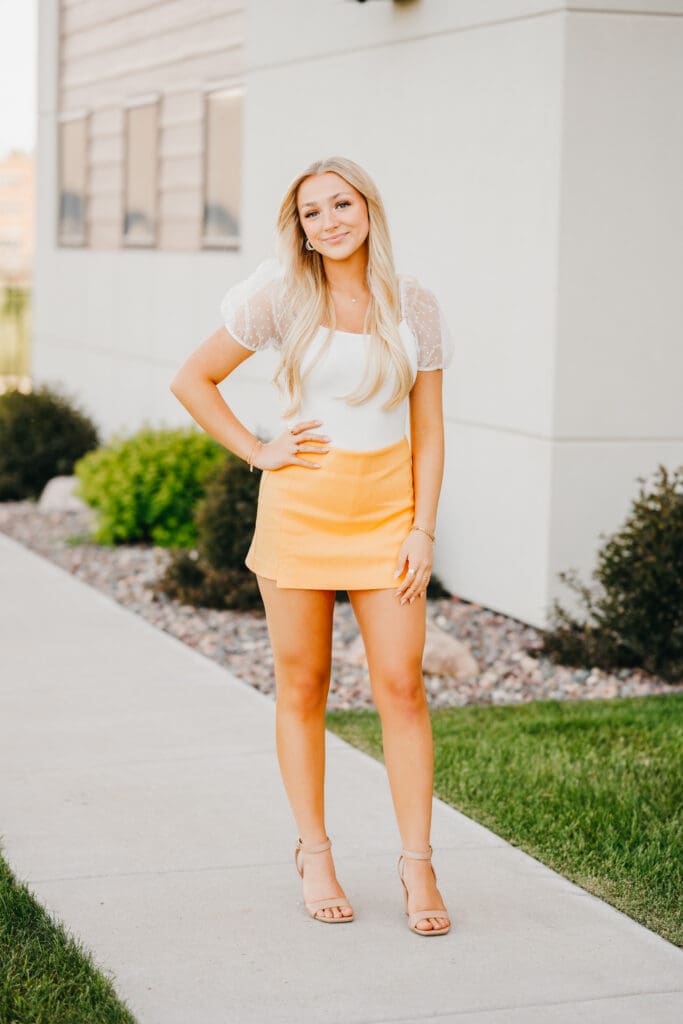

Natural reflectors are everywhere
One of the biggest mistakes beginners make is assuming reflectors only come from gear.
Not true.
Sometimes the best reflector is already at your location.
Look for:
- Concrete
- Sidewalks
- Light-colored walls
- Sand
- Bright pavement
These surfaces naturally bounce light back onto your subject.
That’s one reason we often choose light-colored locations when possible.
The location is helping us do some of the work.

Using a reflector as shade
Here’s a trick many photographers don’t think about.
Sometimes we don’t use the reflector to reflect light at all.
We use it to block bad light.
If you have:
- Spotty sunlight
- Harsh patches of light
- Bright hotspots on a face
You can use a reflector above your subject to create shade.
This helps create more even lighting and prevents distracting bright spots across the face.
It’s a simple fix when you’re stuck in less-than-ideal lighting conditions.
What to focus on instead
A lot of photographers think they need:
- Better gear
- More presets
- A new lens
Usually, that’s not the problem.
The problem is understanding light.
A reflector isn’t magic.
It simply helps you control light more intentionally.
Instead of focusing on buying more equipment, focus on:
- Recognizing uneven light
- Finding natural reflectors
- Practicing with a reflector in different locations
- Comparing images with and without it
That’s where the learning happens.
Your next action step
Grab a friend.
Walk around town.
Find three different locations.
Take one photo without a reflector.
Take one photo with a reflector.
Then compare them side by side.
You’ll start noticing patterns really quickly.
And once you see what light is doing, photography becomes so much less frustrating.
Final thoughts
If you’ve ever felt like everyone else understands lighting except you, welcome.
We’ve been there.
The good news is that lighting is learnable.
You do not need to memorize a hundred complicated techniques.
You just need to start paying attention to what the light is doing and make small adjustments.
A reflector is one of the easiest ways to do exactly that.
And once it clicks, you’ll wonder why you waited so long to start using one.
Want more simple photography tips every week?

Join our newsletter for practical photography education, behind-the-scenes tips, and simple strategies to help you create sharp, bright, and consistent portraits.
Start here:
https://esquaredphotography.com/newsletter
More places to hang out with us 📸
🎥 Watch the full YouTube video here:
https://youtu.be/sNpEt3Bxv3g
📷 Follow us on Instagram:
https://www.instagram.com/esquared.photography/
🎁 Grab more free photography resources:
https://esquaredphotography.com/freebies
You are not behind.
You just need a plan.
Glow & Grow with E-Squared
How to Master Natural Light for Stunning, Client-Winning Portraits. This video training walks you through how to avoid bad light, deal with not ideal light, and find beautiful light.
Free Training


