

How to Get Everyone in Focus for Group Photos

Have you ever taken a family photo, wedding party photo, or sports team photo and thought it looked great on the back of your camera…
Then you got home, zoomed in, and realized half the group was soft?
Painful.
Group photos can feel stressful because there are more people, more faces, more rows, and way more chances for something to go wrong.
But here’s the good news.
Getting everyone in focus is not about luck.
It comes down to three main things: your aperture, how you line people up, and where you focus.
That’s it.
Let’s keep this simple.
Why group photos go out of focus

When you photograph one person, getting sharp focus is usually easier because your camera only has one subject to worry about.
However, when you add more people, especially in multiple rows, your focus area has to cover more faces.
If your aperture is too low, your group is spread too far apart, or your focus point is in the wrong place, someone is probably going to be blurry.
And yes, it will probably be the person who notices immediately.
Because of course.
Start with the right aperture for group photos
Aperture, also called f-stop, controls how much of your photo is in focus.
When your f-stop number is low, like f/1.8 or f/2.0, your focus area is very thin.
That can be beautiful for one person.
However, it can get risky fast with groups.
If you are photographing several people, you usually need a higher f-stop number so more faces stay sharp.

Our simple aperture starting points

For one or two people, we often start around f/2.0 to f/3.2.
For a family of three to five people, we usually start around f/3.2 or higher.
For large families, wedding parties, or sports teams, we often use f/5.0 or higher.
These are not magic settings.
They are starting points.
However, they give you a much better chance of getting everyone sharp without panicking halfway through the session.
How to fix it
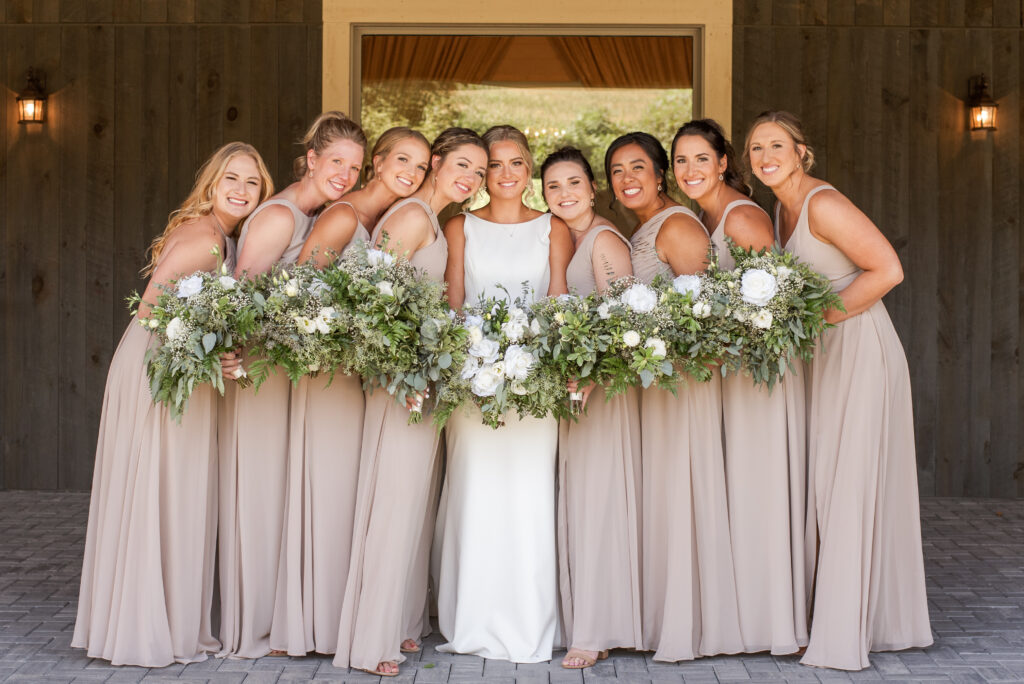
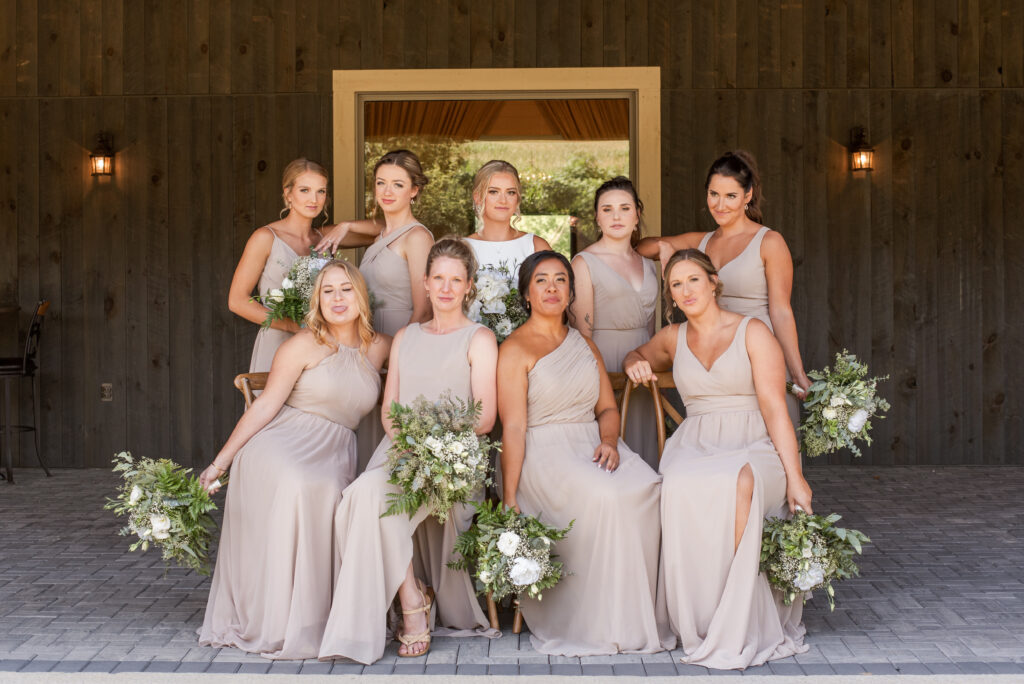
Your aperture matters, but posing matters too.
If people are standing in a curved line or spread far apart front to back, your camera has to work harder to keep everyone sharp.
This is why we tell groups to line up their toes.
Yep.
Toes.
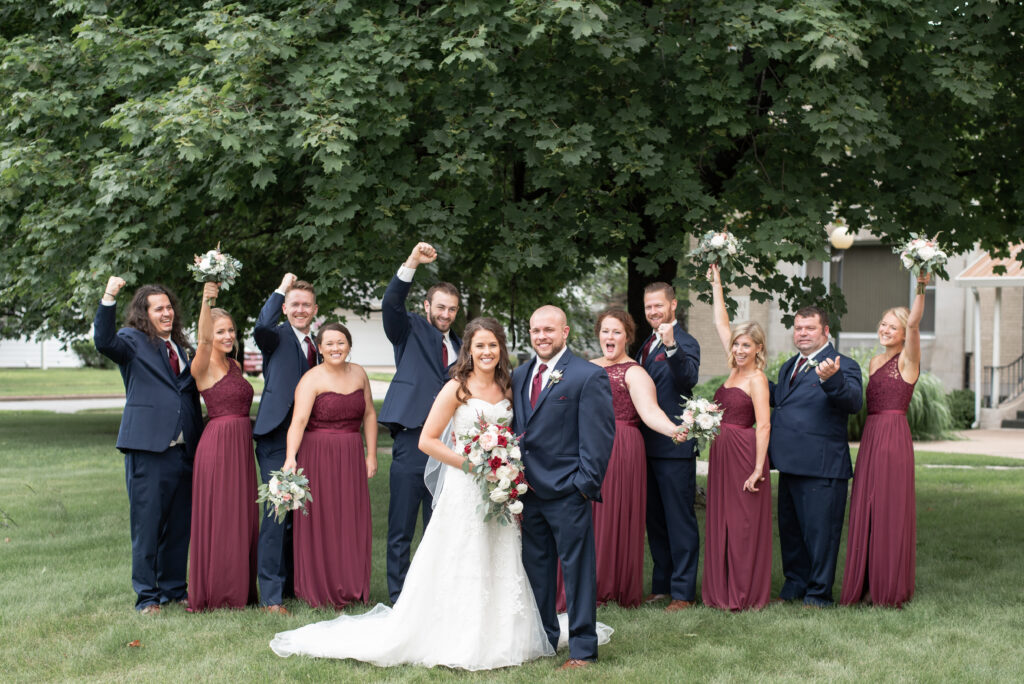
For a straight-line group photo, have everyone’s toes on the same invisible line. This keeps their faces closer to the same focus plane, which helps prevent the people on the ends from getting soft.
It sounds simple because it is.
And simple works.
What to do with multiple rows
Sometimes one long line just looks awkward, especially with wedding parties or large families.
So when you need two rows, bring the back row as close to the front row as possible.
Not “kind of close.”
Really close.
The closer those rows are, the easier it is to keep everyone in focus.
If the back row is too far behind the front row, even a higher aperture might not save you.


Focus in the right place
Once your aperture is set and your group is lined up well, the next question is:
Where do you focus?
For a single row, focus on someone near the center of the group.
For two rows, focus on someone in the front row near the center.
That usually gives your camera the best chance of keeping the whole group sharp.
If one person is much closer to the camera than everyone else, focus on the person closest to you who is also near the center.
That’s your safest bet.
Keep your posing simple

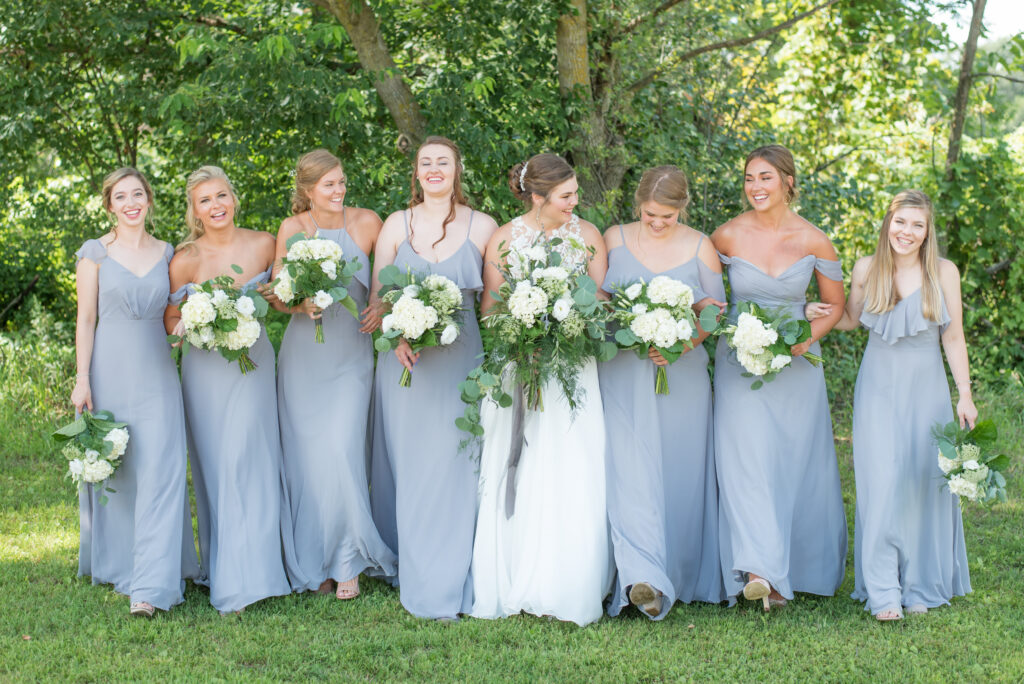
Here’s a bonus tip that will save your brain during group photos.
Stop changing the pose every five seconds.
We get it.
You want variety.
However, every time you completely rearrange a group, you may need to rethink your aperture, focus point, and alignment.
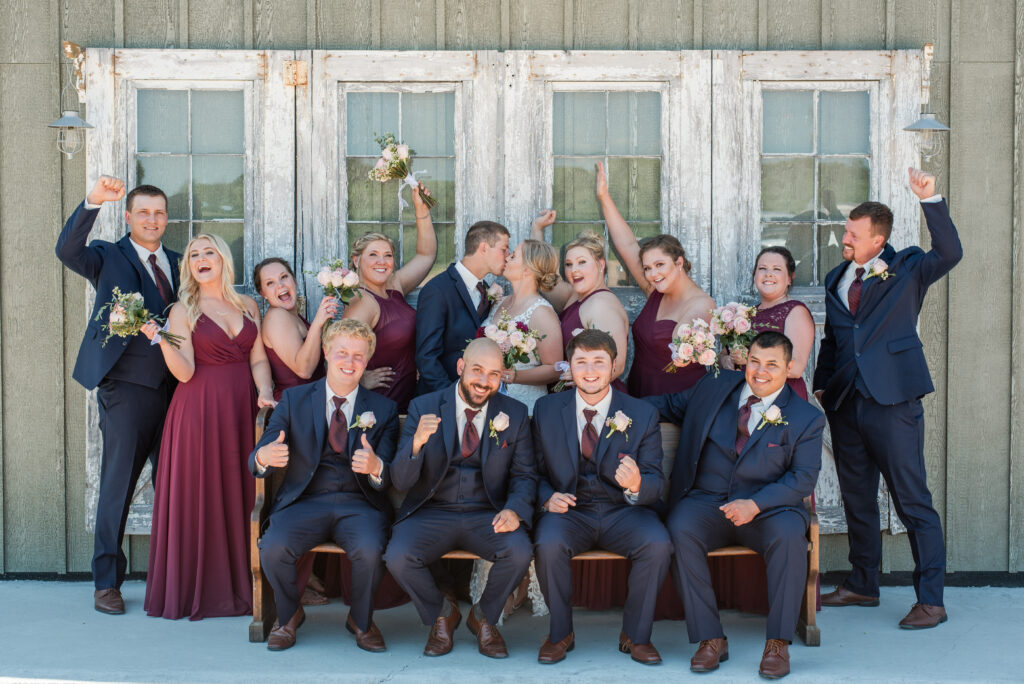
Instead, keep the group in one solid pose and create variety with small changes.
Have them look at each other.
Have them snuggle in.
Have parents tickle the kids.
Have someone change their hand placement.
That gives you variety without creating chaos.
Your camera settings will thank you.
So will your sanity.
What about movement shots?

If kids are running toward you or the group is walking, focus on the main subject or the person closest to the camera.
Also, increase your shutter speed.
Even if your aperture and focus point are perfect, a slow shutter speed can still create blur.
So for movement, give yourself extra room by using a faster shutter speed.
Blurry faces from motion are still blurry faces.
Rude, but true.
A quick checklist for sharp group photos
Before you take the photo, ask yourself:
Is my aperture high enough for this group?
Are people lined up on the same plane?
Are multiple rows close together?
Am I focusing on the right person?
Is my shutter speed fast enough if they are moving?
If you can check those things, you are already way ahead.
Final Thoughts
Getting everyone in focus does not have to feel like a guessing game.
You do not need to memorize a million settings.
You just need to remember the three big pieces:
Aperture.
Alignment.
Focus point.
Start there, and your group photos will become so much more consistent.
Your camera is not broken.
You just need a plan.

Want to master natural light? 🎥

If lighting still feels confusing, we’ve got you.
Our free Glow & Grow Training breaks natural light down step-by-step so you can stop guessing and start creating bright, consistent portraits with confidence.
Inside, you’ll learn how to find beautiful light, avoid harsh lighting situations, and create the soft, glowing portraits you’ve been working toward.
Grab your free seat below, and let’s make lighting finally click.
👉 Watch the free Glow & Grow training here:
https://esquaredphotography.com/glowandgrow
More places to hang out with us 📸
🎥 Watch the full YouTube video here:
https://www.youtube.com/c/ESquaredErinandEmily
📷 Follow us on Instagram:
https://www.instagram.com/esquared.photography/
🎁 Grab more free photography resources:
https://esquaredphotography.com/freebies
You are not behind.
You just need a plan.
Glow & Grow with E-Squared
How to Master Natural Light for Stunning, Client-Winning Portraits. This video training walks you through how to avoid bad light, deal with not ideal light, and find beautiful light.
Free Training


